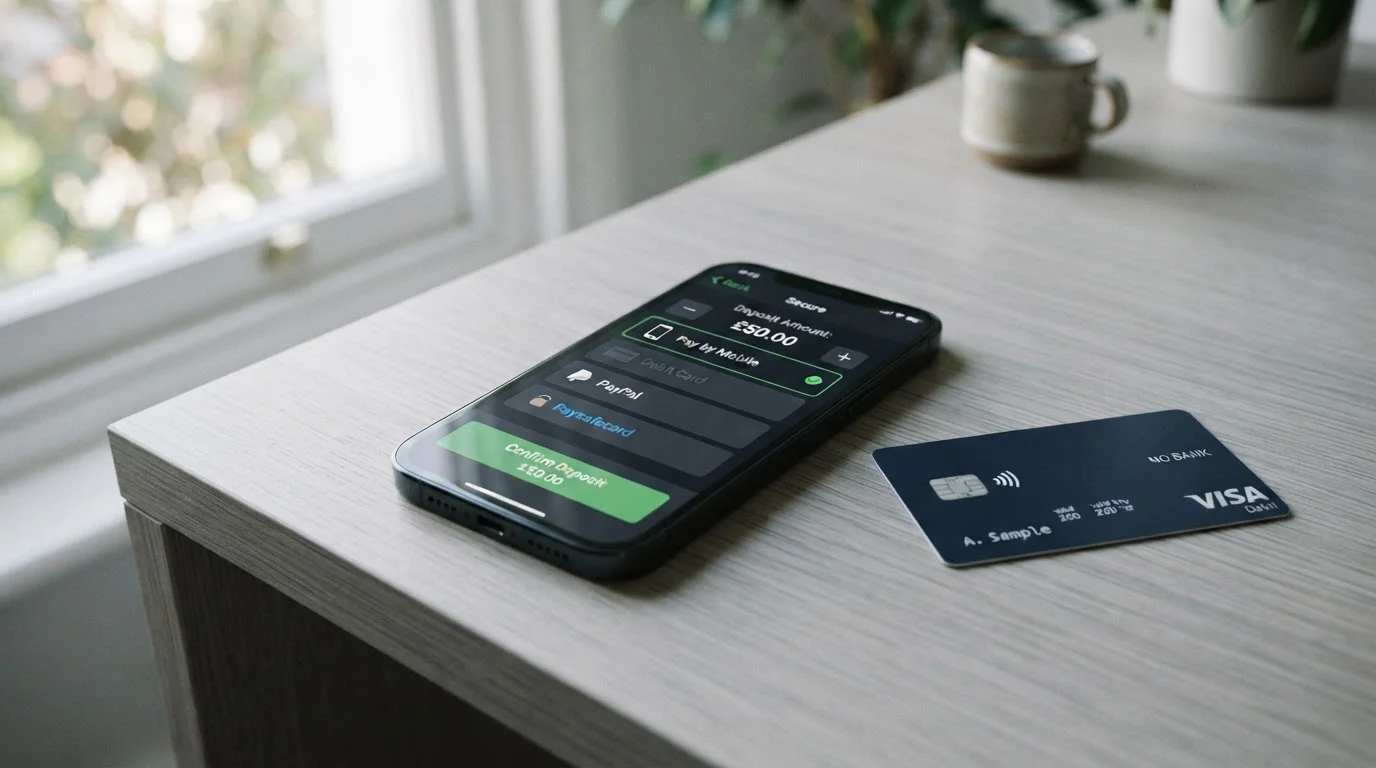
How to Pay at a UK Online Casino in 2026 Without Getting Stung
 Available in GB

The cashier is the least glamorous screen in any online casino and the one that decides the most. It settles how quickly your winnings reach you, whether your welcome bonus survives the first deposit, and how much of your banking life an offshore stranger gets to read. Players spend hours comparing slot RTPs and welcome packages, then pick a payment method in four seconds because it was the first logo on the grid. That four-second decision routinely costs more than the bonus they fought over.
This is the top-level guide to how money moves in and out of UKGC-licensed casinos in 2026. It is a map, not a sales pitch. Debit cards, e-wallets, Apple Pay, open banking, pay-by-mobile, the minimum you can realistically stake, how fast a payout actually lands, and the offshore crypto fork that the Gambling Commission wants no part of. Where a topic deserves its own deep dive, this page hands you off to the hub that covers it. By the end you will know which method fits how you play and which one quietly works against you.
Table of Contents
- The State of UK Casino Payments in 2026
- Debit Cards and Visa: The UKGC Default
- E-Wallets: PayPal, Skrill and the Bonus Trap
- Apple Pay, Google Pay and Pay-by-Mobile
- Bank Transfer, Open Banking and Pay-n-Play
- Minimum Deposits: How Little You Can Actually Stake
- Withdrawal Speed: Why Your Money Waits
- Crypto and No-Account Casinos: The Offshore Fork
- Staying Safe: Licensing, Limits and GAMSTOP
The State of UK Casino Payments in 2026
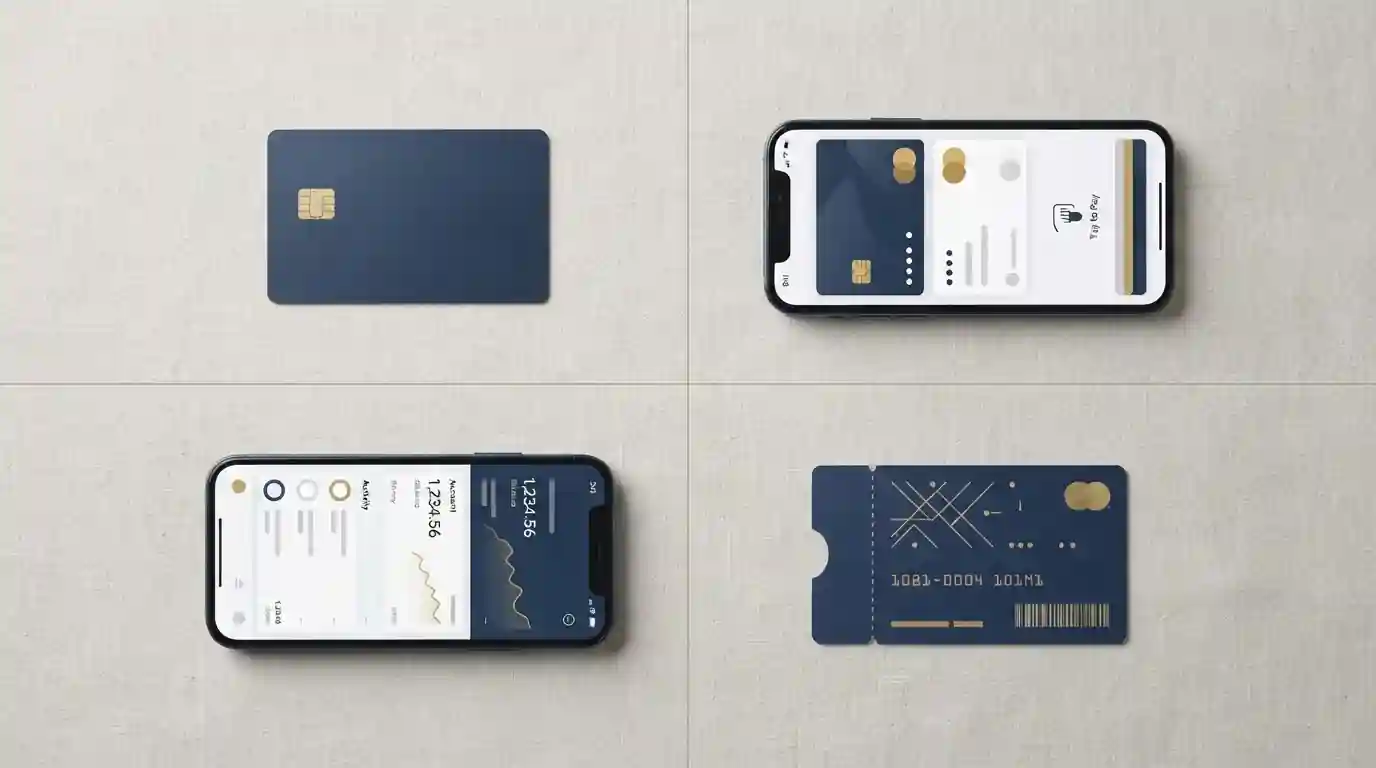
Roughly fifteen payment methods survive at UK-licensed casinos in 2026, and they sort into five families that behave nothing alike. Debit cards are the baseline everyone accepts. E-wallets are fast but allergic to bonuses. Open banking plugs straight into your current account and skips the card number entirely. Mobile wallets like Apple Pay and Google Pay add a fingerprint to a card you already own. Pay-by-mobile bills the deposit to your phone contract. Each family trades speed for privacy, or bonus eligibility for convenience, and no single method wins on every axis. Anyone who tells you there is one best payment method is selling the method, not the truth.
The regulatory backdrop shapes all of it. The Gambling Commission banned credit cards for every form of gambling on 14 April 2020, and that ban still stands, so a UKGC site will only ever take debit. A clutch of reforms has tightened the screws since: welcome-bonus wagering is now capped at ten times the bonus following the December 2025 changes, and the deposit-limit reform that took effect on 30 September recalculates your limit against net deposits, meaning deposits minus withdrawals rather than the gross figure operators used to quote. None of this is cosmetic. It changes what a deposit is worth and how the cashier treats your money.
The whole family tree lives under the Deposit hub, which breaks each method down provider by provider, and the broader framing sits in the online casino payment methods overview if you want the long read on a single page. Here, the job is to show you the shape of the landscape before you descend into any one corner of it.
The Five Families at a Glance
Debit cards are the foundation. Visa and Mastercard debit are accepted at every UKGC operator, deposits land instantly, minimums usually run from one to ten pounds, and cards almost always qualify for the welcome offer. The price you pay is patience on the way out, since card withdrawals take one to three working days once the casino releases them, and you hand your card number to the operator’s database to boot.
E-wallets flip the trade. PayPal, Skrill, Neteller, MuchBetter and the rest deposit instantly and pay out within a day, often within hours, while keeping your bank details to themselves because the wallet sits in the middle. The catch is bonus exclusion and the occasional inactivity fee that nibbles your balance if you walk away for a few months.
Open banking and pay-n-play providers such as Trustly log you into your own bank during the deposit, initiate the payment, and store nothing. Deposits are instant, withdrawals usually land the same day, and the method is generally bonus-eligible. It is the quiet overachiever of the list, held back only by patchy availability. Mobile wallets and pay-by-mobile round things off, adding biometric speed on one hand and a phone-bill spending cap on the other.
Fees are the quiet detail that separates a decent cashier from a greedy one. At a reputable UKGC operator the deposit itself should cost you nothing on every mainstream method, and most charge nothing to withdraw either. Where fees creep in, they come from the payment provider rather than the casino: an e-wallet’s monthly inactivity charge if you abandon the account, a pay-as-you-go carrier surcharge on a phone-bill deposit, or a currency-conversion spread if you fund a foreign-currency wallet and then play in pounds. A casino that charges a flat fee simply to process a withdrawal is behaving badly by current UK standards, and it is a fair reason to take your money elsewhere.
How the Cashier Changed After 2020
It is easy to forget how much the credit-card ban reshaped the cashier, because the result now looks like the natural order of things. Before 14 April 2020, credit cards sat at the top of almost every deposit grid, and a meaningful share of gambling harm traced back to players staking money they did not actually have. Stripping that category out forced operators onto debit, e-wallets and bank rails, and it quietly killed off a swathe of marginal methods that had only ever existed to route credit through the back door. The grid you see today is the ban’s handiwork as much as anyone’s design choice.
The reforms since have pushed in the same direction, towards friction and transparency rather than away from them. Affordability checks arrived, deposit limits became easier to set and harder to game, and the December 2025 wagering cap turned welcome bonuses from near-impossible puzzles into offers a normal player can reasonably clear. Reading a 2026 cashier is therefore a little like reading a slow-moving regulatory project, and the methods that thrive are the ones that fit the direction of travel: traceable, bonus-honest and bounded. The ones that struggle are the anonymous, uncapped routes the Commission is steadily designing out.
Debit Cards and Visa: The UKGC Default
If you do nothing else, you will end up paying by debit card, and that is rarely a mistake. Visa Debit and Mastercard Debit are the one payment method accepted at literally every UKGC-licensed casino, from bet365 and William Hill down to the smallest new launch. Deposits clear in seconds, the minimum is usually a pound to a tenner, and crucially the card almost always keeps your welcome bonus intact. For a first-timer who just wants the offer to work, a card is the boring, correct answer. The full operator-by-operator picture lives on the debit card deposits hub, with dedicated pages for sites that accept debit and sites that still support Visa deposits.
The thing nobody mentions until it bites is the credit card ban. Since 14 April 2020 the Gambling Commission has prohibited credit cards for all gambling under Licence Condition 5.1, online and in person, and that includes credit routed through an e-wallet or a mobile wallet to launder the source. So when the cashier rejects your card, it is not broken, it is doing exactly what the regulator demands. If the card is debit and still bounces, the usual culprit is your own bank: several UK high-street banks let you toggle a gambling block in the app, and plenty of people forget they switched it on.

Visa, Mastercard and the Great Withdrawal Myth
There is a persistent belief that a card deposit is slow. It is not. The deposit is instant, every bit as quick as PayPal. The slowness lives entirely on the withdrawal side, and even there the card is not usually the bottleneck. When you request a payout, the casino parks it in a pending queue for twenty-four to forty-eight hours while it runs fraud and verification checks. Only after it approves the payout does the card network take over, and then you wait one to three working days for Visa or Mastercard to settle it back to the card.
Weekends are where card users get caught. Banking settlement runs on business-hours infrastructure, so a card withdrawal approved on a Friday evening will not even begin moving until Monday and may not surface until Wednesday. An e-wallet user who requested the same payout on Friday could be counting it on Saturday morning. The card itself is reliable and cheap, with no deposit fees at UKGC sites, but if weekend speed matters to you it is simply the wrong tool.
One quiet advantage the card holds over every other method is the chargeback. Because a debit card deposit runs over the Visa or Mastercard networks, you retain the right to dispute a transaction through your bank if an operator behaves fraudulently, refuses a legitimate withdrawal, or takes money it should not have. That protection does not exist with an e-wallet transfer, a bank push payment or, emphatically, a crypto transaction, all of which are effectively final the moment they clear. For a cautious player trying an unfamiliar but licensed site, depositing by card buys a layer of recourse that the faster methods cannot match, and that is worth more than a few hours of settlement speed.
Why the Card Still Wins for Most Players
For all the noise about faster alternatives, the debit card remains the default for a reason that has nothing to do with inertia. It is the only method that is simultaneously accepted everywhere, bonus-eligible almost everywhere, free of deposit fees, and backed by chargeback rights. No other option on this page ticks all four boxes at once. E-wallets lose the bonus, pay-by-mobile loses the withdrawal, open banking loses the universal availability, and crypto loses the licence entirely. The card loses only on raw payout speed, and only against the fastest wallets, and only at weekends.
The practical consequence is a simple default worth internalising. If you are new to a site, uncertain about its reputation, or chasing a welcome offer, deposit by debit card and sort out faster withdrawals later once the account is verified and trusted. Verification only has to happen once per operator, so the first slow payout is a one-off tax you pay for the privilege of faster ones afterwards. Treating the card as a trust-building entry method rather than a permanent choice gets you the best of both worlds.
Can I still use a credit card at UK online casinos in 2026?
No, and this one is not negotiable. Credit cards have been banned for every form of gambling at UKGC-licensed operators since 14 April 2020, covering online and land-based play. The ban even reaches credit routed through e-wallets, so topping up Skrill with a credit card and depositing from there is not a loophole. Only debit and your own cleared funds are allowed.
E-Wallets: PayPal, Skrill and the Bonus Trap
E-wallets are the speed merchants of the UK cashier, and they come with a tax written in very small print. PayPal, Skrill, Neteller, MuchBetter and friends deposit instantly and, once the casino releases a withdrawal, pay out in zero to twenty-four hours, frequently inside an hour. Because the wallet sits between you and the operator, the casino never sees your card or bank details, which is a genuine privacy win. The dedicated breakdowns, including casinos that accept PayPal and the wider e-wallet roster, sit under the Deposit hub.
Now the tax. Somewhere around eighty percent of UK casinos exclude at least some e-wallet deposits from bonus eligibility, and Skrill and Neteller are the usual names on the banned list. This is not operator spite. E-wallets make it trivially easy to spin up multiple accounts and farm welcome bonuses across sites, so anti-fraud teams simply refuse to attach promotions to them. The practical upshot is brutal: deposit two hundred pounds via Skrill to grab a matched welcome offer, and you may find the deposit went through fine while the bonus silently never attached. You did not break a rule you were told about; you tripped one buried in the terms.
PayPal, Skrill and the Availability Squeeze
PayPal is the e-wallet UK players trust most, and it is also the one getting harder to find. As of 2026 only a few dozen UKGC casinos accept it, and the number drifts down rather than up, because PayPal’s own compliance standards for gambling merchants are strict and some operators cannot or will not meet them. When you do find it, PayPal tends to be more bonus-friendly than Skrill or Neteller and carries no deposit fee, which is why it remains the e-wallet worth chasing.
Skrill and Neteller, both owned by Paysafe, are far more widely accepted but far more likely to void a bonus, and both can levy a monthly inactivity fee, around five pounds and change, if you leave the account dormant. MuchBetter is a mobile-first wallet that has quietly won a lot of UK casino integrations and tends to be friendlier on fees. The sensible move is to treat e-wallets as your withdrawal tool, not your deposit tool: deposit on a card to secure the bonus, then withdraw to a wallet for speed, assuming the operator lets you, which many do not without matching your deposit method first.
That deposit-method-matching rule trips up more players than the bonus exclusion does. Anti-money-laundering regulation requires operators to return funds to the source where possible, so most will insist that your first withdrawal goes back to whatever you deposited with. Deposit by card and you will usually be paid back to the card, no matter how much you would prefer the e-wallet’s speed, until you have withdrawn at least once and the account is seasoned. Players who assume they can deposit cheaply on one rail and sprint out on another are often disappointed at the cashier, and the fix is to plan the exit before you make the entrance.
The Hidden Cost of a "Free" Wallet
E-wallets are marketed as free and mostly are, right up until they are not. The inactivity fee is the classic trap: leave a few hundred pounds sitting in a Skrill or Neteller balance you have stopped using, and the provider will begin deducting a monthly charge after a dormancy period, quietly eroding money you were not even gambling. The lesson is to sweep a wallet back to your bank once you are done with a casino run rather than treating it as a savings account, because it is designed to be a conduit, not a vault.
Currency is the other silent leak. If you hold a multi-currency wallet and let it sit in euros or dollars while you play in pounds, every deposit and withdrawal can quietly attract a conversion spread that the casino never shows you. Keeping the wallet in sterling, funding it from a UK account, and playing at UK operators avoids the whole problem. None of this makes e-wallets a bad choice; it makes them a tool that rewards a little housekeeping and punishes the set-and-forget approach that works fine for a plain debit card.
Why does my e-wallet deposit cancel my welcome bonus?
Because operators exclude e-wallets from promotions to stop bonus abuse, not because the deposit failed. Skrill and Neteller in particular let fraudsters open many accounts cheaply and farm welcome offers across sites, so casinos refuse to attach bonuses to them. The fix is simple: read the promotion terms, and deposit on a debit card when you want the welcome offer to stick.
Apple Pay, Google Pay and Pay-by-Mobile
Phones have swallowed the cashier, and two very different things hide behind the "pay with your phone" banner. Apple Pay and Google Pay are not payment methods in their own right; they are a biometric wrapper around a debit card you already hold. Pay-by-mobile, run through Boku and similar services, is genuinely different: it charges the deposit to your phone bill or deducts it from pay-as-you-go credit. Lumping them together is how people end up confused about why one lets them withdraw and the other does not.
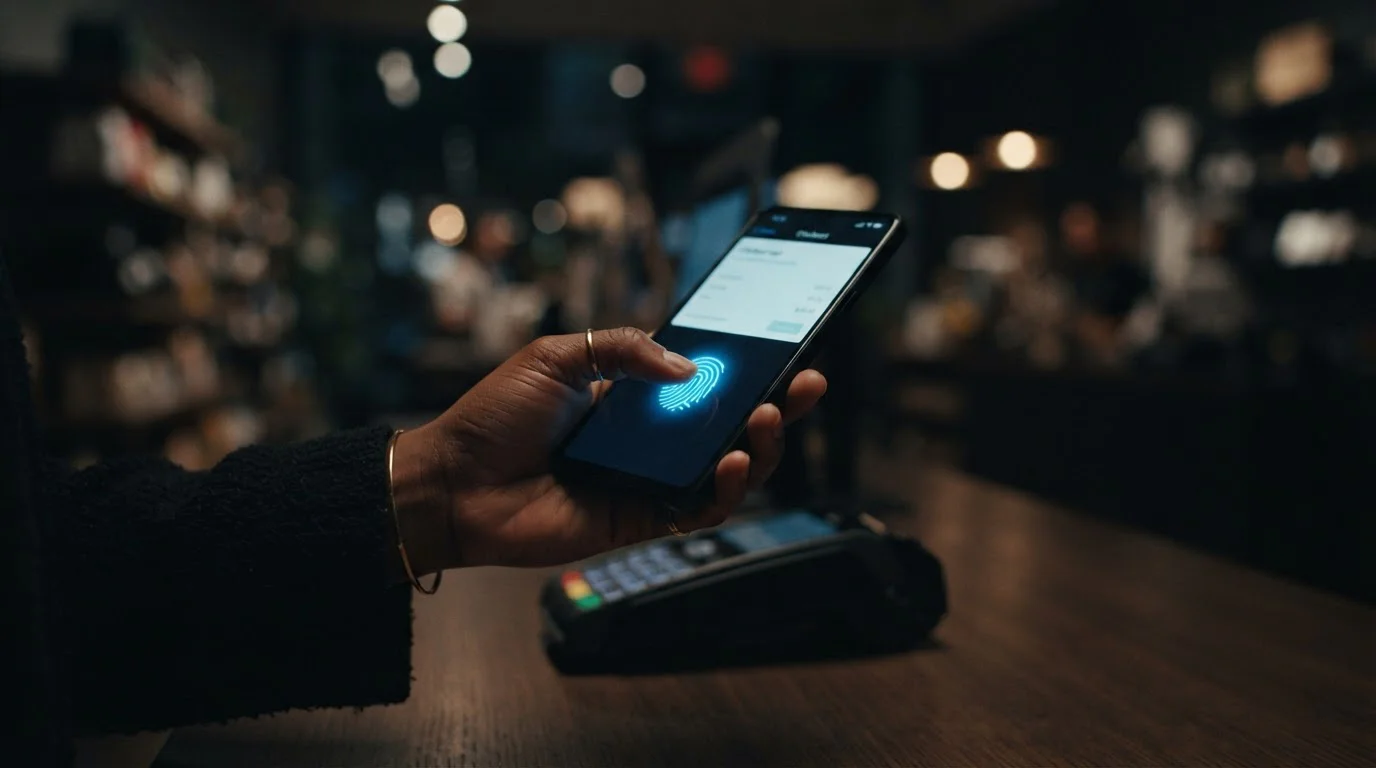
Apple Pay and Google Pay tokenise your card, so the casino receives a one-time code rather than your real sixteen digits, and you authorise the deposit with Face ID or a fingerprint. Deposits are instant, and because the underlying instrument is a debit card the money can come back the same way in one to three days. The snag is familiar: mobile wallets are often excluded from bonuses, treated like the e-wallets they superficially resemble. Both are covered in detail on the Deposit hub if you want the operator lists.
Boku, Phone Bill Deposits and the Spending Cap
Pay-by-mobile is the one method on this list with hard spending friction baked in, and that is either its best feature or its biggest limitation depending on why you are here. Boku caps deposits at thirty pounds per transaction and typically forty pounds per day, charged straight to your mobile account, with confirmation by SMS and nothing more to set up. There is no card, no bank login, no e-wallet registration. For a player who wants a firm ceiling on how much can leave in a session, that cap is a feature you cannot override in the heat of the moment.
The flip side is unmissable: pay-by-mobile is deposit-only. You physically cannot withdraw winnings to your phone bill, so you must nominate a second method, usually a debit card or bank transfer, for payouts. Some pay-as-you-go deposits also attract a carrier surcharge, so read the small print on your network. The full picture, including mobile top-up and pay-with-phone-credit variants, sits on the Deposit hub.
There is also a subtler cost worth naming. Depositing to your phone bill means a contract customer only settles up at the end of the billing cycle, which puts a small delay between the moment you gamble and the moment the money leaves your account. For some that delay is harmless; for anyone prone to chasing, it blurs the feedback loop that keeps spending visible, because the pain arrives weeks later as a lump on a bill rather than instantly from a balance. Pay-as-you-go sidesteps that by drawing on credit you have already loaded, which is one reason it suits the budget-minded better than a monthly contract does.
Which Phone Method Suits Which Player
Apple Pay and Google Pay are the right call for a player who already deposits by card, trusts the site, and simply wants the fastest, most secure way to fund an account from a phone. The tokenisation genuinely improves security over typing card digits into a cashier, the biometric step blocks casual misuse of an unlocked phone, and because the underlying instrument is a debit card the money can withdraw back the same way. If the mobile wallet is bonus-eligible at your chosen site, which is worth checking before you deposit, there is little reason not to use it.
Pay-by-mobile suits a very different player: one who wants a hard, un-negotiable ceiling on spending and is willing to withdraw by another route to get it. The thirty-pound-per-transaction and roughly forty-pound-daily caps are not an inconvenience to be worked around; they are the entire point for someone using the method as a spending guardrail. Match it with a licensed site’s own deposit limits and you have two independent brakes, neither of which you can release in a moment of weakness, which is precisely the kind of friction that outperforms willpower.
Is pay-by-mobile a good way to control my spending?
For many players, yes. Boku and similar services cap deposits at around thirty pounds per transaction and roughly forty pounds a day, charged to your phone bill, which puts a hard ceiling on a session that you cannot raise impulsively. The trade-off is that it is deposit-only, so winnings must be withdrawn to a card or bank account instead.
Bank Transfer, Open Banking and Pay-n-Play
The oldest and the newest ways to move money sit side by side here, and they could hardly be more different in feel. A traditional bank transfer is the slow, dependable workhorse: high limits, no third party, and a settlement window of two to five working days that makes it the last resort for anyone in a hurry. It still has a place for large withdrawals that exceed e-wallet limits, where a few extra days matter less than getting the full sum in one clean movement.
Open banking is the transfer reinvented for people with no patience. Providers like Trustly use the regulated PSD2 APIs to log you into your own bank during the deposit, initiate the payment in the same session, and store nothing afterwards. No card number, no separate account, no credentials saved. Deposits are instant, withdrawals usually land the same day or inside twenty-four hours, there are no fees, limits are generous, and it is typically bonus-eligible. The only thing holding it back is coverage, since fewer UK operators support it than support cards, though the list grows every year. Both routes are documented on the Deposit hub.
Pay-n-Play and the No-Registration Promise
Pay-n-play is open banking with the account-creation step surgically removed. You arrive at a participating casino, deposit via your bank, and start playing, with the operator pulling your identity details from the banking data in the background rather than asking you to fill in a registration form. At a legitimate UKGC site this does not skip verification; it just moves the paperwork out of your way, because the KYC checks still happen under the bonnet using the data your bank passes across.
This is where a lot of marketing gets slippery. "No registration" and "no account" are real conveniences at licensed sites, but the same phrases get borrowed by offshore operators to imply no checks at all, which is a different and riskier proposition entirely. The licensed, legitimate versions live under the no-account options hub, which is careful to separate genuine pay-n-play convenience from the not-on-GAMSTOP end of the market.
When a Plain Bank Transfer Still Makes Sense
The old-fashioned manual bank transfer looks obsolete next to open banking, and for most players it is, but it keeps one niche that nothing else fills cleanly: the large withdrawal. E-wallets impose per-transaction and monthly ceilings that a serious win can blow straight through, and splitting a payout across several wallet withdrawals is both slow and a magnet for extra verification. A standard bank transfer handles a four- or five-figure payout in a single clean movement, with no intermediary taking a cut and no limit that a good night triggers. The price is patience, two to five working days, which for a sum that size is rarely the deciding factor.
It also appeals to players who simply distrust intermediaries. A direct transfer keeps the whole journey inside the regulated banking system, with no e-wallet account to maintain, no voucher to buy and no app to authorise. For someone depositing rarely and in size, who values simplicity and a clear paper trail over speed, the humble transfer remains a perfectly rational choice. It is the method you grow into rather than start with, and it is quietly the backbone of how big balances actually leave UK casinos.
What is pay-n-play and does it exist in the UK?
Pay-n-play lets you deposit through open banking and start playing without filling in a registration form, with the casino pulling your identity from the banking data instead. It does exist in the UK via providers like Trustly, and at UKGC sites the verification still happens behind the scenes. The phrase is also misused by offshore sites to imply no checks, which is a different thing.
Minimum Deposits: How Little You Can Actually Stake
Minimum deposit sounds like a footnote and is actually a strategy. The floor dictates how far you can stretch a small bankroll, whether a welcome offer is worth claiming, and how much you expose on a casino you are only trying out. UK operators group into tiers, and the method you choose interacts with them, since some providers impose their own minimums on top of the casino’s. The full breakdown of each tier, including no-minimum sites, sits on the minimum-deposit options hub.

The one-pound tier is real but narrow, found at a handful of operators and almost always via debit card, since e-wallets often set their own five or ten pound floor. It is ideal for cautiously testing a new site. The four-pound tier is a quirk of certain operators’ processing rules, while the ten-pound tier is the genuine sweet spot: it is where most meaningful welcome bonuses unlock, because a two-hundred-percent match on a pound is not worth an operator’s trouble. No-minimum sites exist but are rare and usually come with strings attached elsewhere.
| Tier | Typical methods | Best for | Bonus usually unlocks? |
|---|---|---|---|
| £1 minimum | Debit card | Testing a new site cheaply | Rarely |
| £4 minimum | Debit card, some wallets | Low-risk casual play | Sometimes |
| £10 minimum | All methods | Claiming welcome offers | Yes |
| No minimum | Debit card, open banking | Micro-stakes and trials | Varies |
First Deposits and the Wagering Reality
The first deposit is the one the welcome bonus hangs on, and the rules around it changed meaningfully at the end of 2025. Welcome-bonus wagering is now capped at ten times the bonus following the December 2025 reform, which is a real improvement on the forty and fifty times multipliers that used to make offers mathematically pointless. A ten-pound deposit with a ten-pound bonus at 10x wagering means a hundred pounds of play-through, not a thousand, which is the difference between a promotion you might clear and one designed never to be cleared.
That reform makes the ten-pound tier more attractive than ever, because a larger qualifying deposit unlocks a larger bonus against a now-survivable wagering requirement. Pair it with a debit card to keep the bonus eligible, mind the game-weighting rules that mean slots count fully while table games often count ten percent or not at all, and you have a first deposit that actually works for you. The first-deposit bonus detail lives on the minimum-deposit hub.
The max-bet rule is the clause that catches out more bonus players than the wagering multiplier ever does. While a bonus is active, most operators cap your stake per spin or hand, commonly at around five pounds, and breaching it even once can void the entire bonus and any winnings from it. The logic is to stop a player loading a matched deposit and swinging for a single huge bet, but the effect is that a careless click on a high-stakes slot can quietly incinerate the whole promotion. Reading the max-bet line before you start play is the single most valuable minute you will spend on any welcome offer.
Matching the Deposit to the Bankroll
Choosing a tier is really a question about how much risk you want on a given site on a given night. A one-pound deposit at a brand you have never used is reconnaissance, not gambling: you are spending a pound to see how the lobby feels, how fast the cashier verifies you, and whether the withdrawal experience matches the marketing. Treating the smallest tier as a test rather than a serious stake is exactly the right instinct, and it costs almost nothing to learn whether a site is worth your real money.
Once a site has earned trust, the ten-pound tier is where the economics turn in your favour, because that is the level most welcome offers are engineered around and the level at which a cleared bonus actually adds meaningful value. Stepping above it rarely improves the bonus ratio and simply puts more of your bankroll at stake, so there is seldom a reason to deposit large just to claim an offer. The disciplined pattern is small to test, ten to claim, and no higher than your pre-set deposit limit allows, with the minimum-deposit options hub covering each tier in full.
What is the lowest deposit I can make at a UK casino?
A pound, at a small number of UKGC operators, almost always by debit card since many e-wallets set a higher floor of their own. The one-pound tier is genuine and useful for testing a site, but it rarely unlocks a worthwhile welcome bonus. For bonuses, the ten-pound tier is the practical minimum, which is why most promotions are built around it.
Withdrawal Speed: Why Your Money Waits
Here is the honest truth operators bury under the word "instant": your deposit is instant, your withdrawal almost never is, and the delay is mostly the casino’s doing, not the payment network’s. Every UKGC-licensed operator holds your first withdrawal in a pending queue while it runs identity verification, typically twenty-four to forty-eight hours, and only after it approves the payout does your chosen method’s settlement clock start ticking. Blaming Visa for a slow payout is like blaming the post office for a parcel you have not yet packed. The fastest-paying operators and the methods that get you there soonest are ranked on the fast-withdrawal casinos hub.
Once the casino releases the money, the method does the rest, and the spread is wide. E-wallets and open banking settle in zero to twenty-four hours. Debit cards take one to three working days. Traditional bank transfers run two to five. Weekends and bank holidays add another day or two to anything travelling on banking-hours rails, which is to say cards and transfers but not wallets. If payout speed is your single priority, the ranking is simple and rarely changes.
| Stage | What happens | Typical time |
|---|---|---|
| Deposit (any method) | Funds hit your balance | Seconds to minutes |
| Pending / review | Casino runs KYC and fraud checks | 24–48 hours |
| E-wallet settlement | PayPal, Skrill, Neteller pay out | 0–24 hours |
| Open banking settlement | Trustly clears to your bank | Same day |
| Debit card settlement | Visa or Mastercard returns funds | 1–3 working days |
| Bank transfer settlement | Standard transfer clears | 2–5 working days |
Flushing, Reverse Windows and Other Delays
Two operator tricks stretch payouts beyond the raw settlement time, and knowing them is worth more than any speed ranking. The first is the reverse-withdrawal window, a period, sometimes a full day or longer, during which your requested payout sits reversible in your account, tempting you to cancel it and gamble it back. Plenty of winnings never make it out of that window, which is precisely the point of its design. The best fast-payout casinos either remove the reverse window or keep it short, and that single feature matters more than whether settlement is twelve hours or eighteen.
The second is affordability and source-of-funds checks, which UKGC enforcement has made more common, not less, in 2026. A large or unusual withdrawal can trigger a request for bank statements or proof of income, and the payout waits until you satisfy it. This is friction working as intended for player protection, but it means "fastest payout" is a claim about a clean, verified, modest withdrawal, not a guarantee for every situation. The operators that handle it best, and the ones that pay highest and quickest, are compared on the fast-withdrawal casinos hub.
Why does my withdrawal sit as pending for two days?
Because the casino, not the payment network, is holding it. Every UKGC operator parks withdrawals in a review queue for roughly twenty-four to forty-eight hours to run identity and fraud checks, especially on your first payout. The payment method’s own settlement time only starts once the casino approves the release, so an e-wallet is quick only after that pending period clears.
Crypto and No-Account Casinos: The Offshore Fork
This is the part of the map marked "here be dragons", and it is worth being blunt about why. No UKGC-licensed casino accepts cryptocurrency. Not Bitcoin, not the altcoins, none of it. So the moment a site advertises BNB, Bitcoin Cash, Dogecoin, XRP or Solana deposits to a UK player, you are no longer looking at a UK-regulated operator; you are looking offshore, outside the Gambling Commission’s protection, its dispute resolution, its self-exclusion scheme and its affordability rules. That is not a small technicality. It is the entire safety net removed in one step.

The appeal is obvious and the risk is the same thing wearing a different hat. Crypto can be fast, pseudonymous and free of the deposit limits that a licensed site must enforce. No-account and no-KYC offshore casinos lean hard on exactly that, promising play without registration, without verification, without a GAMSTOP link that would otherwise lock out a self-excluded player. The honest framing lives on our crypto casinos hub for the coin-by-coin detail and on the no-account options hub for the no-registration and not-on-GAMSTOP end, both of which document what you gain and, more importantly, what you forfeit.
What You Give Up Offshore
The protections you lose going offshore are not abstract. A UKGC site must honour GAMSTOP self-exclusion, enforce the net-deposit limit reform that took effect on 30 September, cap bonus wagering at ten times, segregate player funds, and submit to the Commission’s complaints process. An offshore crypto site is bound by none of that. If it refuses a withdrawal, invents a wagering clause after the fact, or simply vanishes, your recourse is close to nil, and the irreversibility of a crypto transaction means there is no chargeback to fall back on either.
There is also the self-exclusion gap, which is the one that genuinely worries the people who study this. A player who has signed up to GAMSTOP to stop gambling can still reach a not-on-GAMSTOP offshore site, and crypto’s no-KYC promise is precisely what lets them. For someone using self-exclusion as a recovery tool, that door being open is not a feature. We cover these sites on the no-account options hub because players search for them, but the hub is unambiguous about the trade-off rather than cheerleading it.
The volatility nobody factors in is the coin itself. Deposit in a currency that can swing ten percent in an afternoon and your balance is gambling before you have placed a single bet, which cuts both ways and is rarely what a casino player signed up for. Stablecoins exist to smooth that out, but they add their own counterparty questions, and converting in and out of crypto to fund a session layers exchange fees and spreads on top of everything else. What looks like a fee-free, frictionless deposit on the surface can quietly cost more than a plain card once the conversion maths is done, before you even reach the question of whether the offshore operator will honour a payout.
Why Players Still Look Offshore
It would be dishonest to pretend the offshore pull is irrational. Players head that way for concrete reasons: they have hit a UK affordability check they find intrusive, they want higher deposit limits than a licensed site will grant, they are chasing bonus terms the UK reforms have made rarer, or they have self-excluded and are looking for a way around their own decision. Each motive is understandable, and each is also, on closer inspection, a reason the UK framework exists in the first place. The friction that pushes people offshore is frequently the very friction designed to protect them.
Our position across the crypto casinos and no-account options hubs is to inform rather than moralise, because players will search for these sites whether or not anyone approves. What those hubs do is lay out, coin by coin and site type by site type, exactly which protections evaporate at the border, so the decision is at least made with open eyes. The one thing we will not do is dress an unregulated, irreversible, self-exclusion-bypassing payment route up as a clever life hack, because for the players most likely to be reading, it is the opposite.
Are crypto casinos legal for UK players?
No UKGC-licensed casino accepts cryptocurrency, so any crypto casino taking UK players is offshore and outside Gambling Commission regulation. Using one is not a criminal act for the player, but it strips away every UK protection: GAMSTOP self-exclusion, deposit limits, fund segregation and dispute resolution. With no chargeback on a crypto transaction, a refused withdrawal usually means the money is simply gone.
Staying Safe: Licensing, Limits and GAMSTOP
Every payment decision on this page ultimately rests on one check: is the casino UKGC-licensed? That single fact determines whether the credit-card ban protects you, whether the ten-times wagering cap applies, whether your funds are segregated, and whether GAMSTOP can lock you out when you ask it to. You can verify a licence on the Gambling Commission’s public register in under a minute, and an operator that makes its licence hard to find is telling you something. Plausible UK names to anchor on include bet365, William Hill, Betway, LeoVegas, 888, Casumo, Sky Vegas and Paddy Power, all long-standing licensed operators, though you should always confirm current status yourself rather than trust any list.

The payment method itself can be a safety tool. Pay-by-mobile’s thirty-pound cap, a prepaid voucher’s fixed load, a fintech bank’s in-app gambling block, and the net-deposit limit you can set directly with a licensed operator all build friction into spending in a way that willpower alone rarely matches. The deposit-limit reform that landed on 30 September is worth understanding here: your limit is now measured against net deposits, deposits minus withdrawals, so withdrawing and redepositing no longer quietly inflates how much you can put in. It is a meaningful tightening, and it works only at licensed sites.
Setting Limits That Actually Hold
The tools that genuinely help are the ones you set before a session rather than during one. A deposit limit, a loss limit, a session-time reminder and a cooling-off period are all available at any UKGC site, and the honest advice is to treat them as defaults you switch on at signup, not emergency brakes you reach for mid-tilt. Choosing a payment method with its own ceiling, whether that is a capped pay-by-mobile deposit or a prepaid voucher, stacks a second layer of friction on top, and friction is the whole game when it comes to controlling spend.
If gambling has stopped being fun, GAMSTOP is the serious lever. It is the free national self-exclusion scheme that blocks you from every UKGC-licensed site for six months, a year or five years, and it is the single most effective tool the UK offers. Its one weakness is the offshore gap covered earlier, which is the strongest practical argument for staying on licensed sites in the first place. Organisations like GamCare and BeGambleAware sit alongside it for support, and a UKGC casino will link all of them from its footer.
It helps to see the whole site as one connected safety system rather than a set of unrelated features. The licence is the foundation, the payment rails you choose add or subtract friction on top of it, and the account tools, deposit limits, loss limits, time-outs and self-exclusion, are the controls you set yourself. Each layer backs up the others: a licence means the limits are enforceable, a capped payment method means a slip is contained, and GAMSTOP means a bad patch can be walled off entirely. Weakening any single layer, which is exactly what going offshore does, removes the backstop for all the rest at once.
The payments map on this page ultimately serves that bigger picture. Knowing that a debit card keeps a bonus alive, that an e-wallet trades a bonus for speed, that pay-by-mobile caps a session, that open banking skips the card number, and that crypto skips the regulator, is not trivia; it is the toolkit for matching how you pay to how you want to play and how much you want to protect yourself. Start from the Deposit hub for the method detail, lean on fast-withdrawal casinos when speed is the priority, and keep the licence check as the non-negotiable first step every single time.
How do I check a UK casino is properly licensed?
Look up the operator on the Gambling Commission’s public licence register, which anyone can search in a minute, and cross-check the licence number shown in the casino’s footer against it. A genuine UKGC site displays its licence clearly, offers GAMSTOP and deposit limits, bans credit cards, and refuses crypto. Any site missing those signals, or taking cryptocurrency from UK players, is operating outside UK regulation.
Published by the Payments-casino-uk team.